Category: Food

  • Panettone Trifle

    We had a lot of trouble finding this online, so we grabbed a copy. It’s a firm favourite at Christmas.

    Panettone Trifle

    Gordon Ramsay’s recipe for a trifle with homemade creme anglaise, using panettone instead of sponge.

    Ingredients
      

    • 300 ml double cream
    • 100 ml milk
    • 1 vanilla pod split and seeds removed
    • 50 g caster sugar
    • 6 large free range egg yolks
    • 2 tsp cornflour
    • 1/2 orange zest
    For the creme anglaise
    • 300 ml double cream
    For the trifle
    • 250 g panettone
    • 50 g orange marmalade
    • 2 tbsp orange flavoured liqueur e.g. Grand Marnier
    • 600 ml double cream
    • 1 vanilla pod split and seeds removed
    • 2 tbsp icing sugar to taste
    • 1/2 lemon zest
    To serve
    • 100 g dark chocolate grated
    • 1/2 lemon zest
    • 1 orange zest

    Method
     

    1. First make the creme anglaise. Put the cream and milk in a heavy based pan Split the Vanilla pod scrape out the seeds with the tip of a knife and add them to the pan. Slowly bring to the boil.
    2. Meanwhile beat the sugar, egg yolks and cornflour together in a large bowl. Gradually pour over the hot milk whisking constantly.
    3. Return is mature to the pan and cook on low heat, string continuously with a wooden spoon until the custard has thickened. Stir in the orange zest.
    4. Cut the panettone into thick slices and spread with marmalade. Cut into bite sized cubes and place into a larger bowl.
    5. Sprinkle over the orange liqueur and toss lo coat evenly. Spoon the creme anglaise over the panettone and smooth off the top. Chill in the fridge until set.
    6. When ready to serve, whip the cream with the vanilla seeds until thickens. Sift in the icing sugar and continue to whip to create soft peaks then stir in the lemon zest.
    7. Spoon the whipped cream on top of the trifle. Sprinkle with grated dark chocolate, lemon and orange zests.
  • Curry Powder

    Curry Powder

    The classic curry powder mix we use when making Singapore fried rice noodles.

    Ingredients
      

    • 5 tablespoons ground coriander
    • 2 tablespoons ground cumin
    • 1 tablespoon ground turmeric
    • 2 teaspoons ground ginger
    • 2 teaspoons ground fenugreek seeds
    • 1.5 teaspoons ground black pepper
    • 1 teaspoon ground cinnamon
    • 0.5 teaspoon ground chilli

    Method
     

    1. Put all of the ingredients together in a jar, put on the lid and shake to mix.

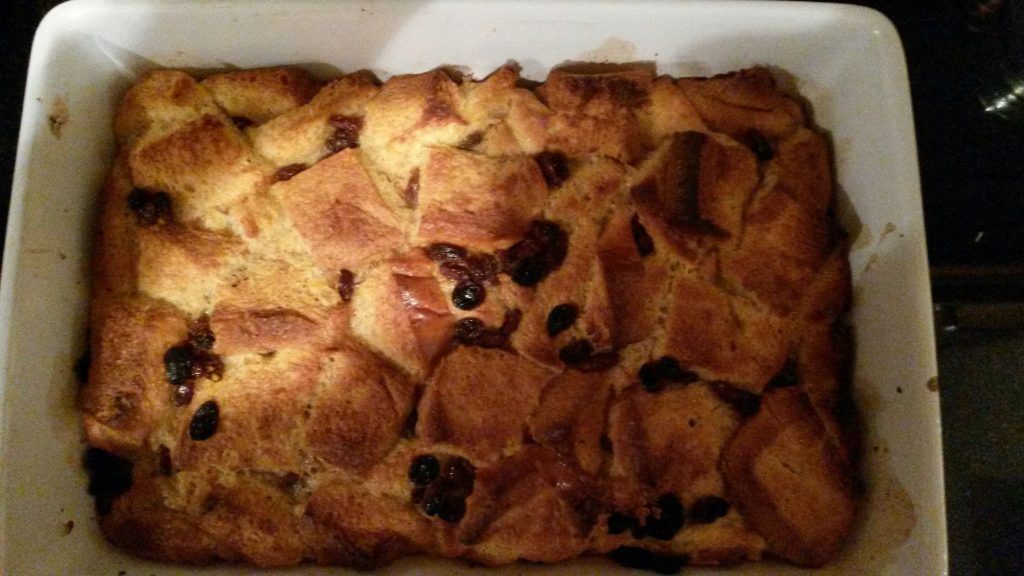
  • Bread and Butter Pudding

    Bread and Butter Pudding

    This is described by Jon as being the best Bread and Butter Pudding – although he has been carrying this recipe around for a year and a half without cooking it, so maybe it isn’t. We’ll see!
    Prep Time 20 minutes
    Cook Time 1 hour
    Total Time 1 hour 20 minutes
    Servings: 4 people

    Ingredients
      

    • 500 g bread sliced and broken up
    • 500 g mixed dried fruit
    • 140 g brown sugar
    • 600 ml milk
    • 2 eggs beaten
    • 1.5 tbsp mixed spice
    • 100 g butter melted

    Method
     

    1. Mix all of the ingredients apart from the butter together in a large bowl and leave for 15 minutes.
    2. Squeeze together the mixture, then stir in the melted butter.
    3. Tip into a greased lined dish. Sprinkle with a little demerera sugar and cook for 1.5 hours at gas mark 4 / 180 degrees C.
  • Nandos Style Spicy Rice

    Nandos Style Spicy Rice

    This rice recipe is close to what we have at Nandos.
    Servings: 4 people

    Ingredients
      

    • 2 cups Basmati rice
    • 1/2 tbsp Turmeric
    • 1 Chicken stock cube
    • 1/2 Red pepper diced
    • 1/2 tbsp Oil
    • 1/2 Onion finely diced
    • 1 clove Garlic crushed
    • 1/2 Yellow pepper diced
    • 1/2 Red chilli
    • 1 tsp Smoked paprika
    • 1/2 tsp Cumin

  • Fondue

    This is the basic cheese fondue recipe that came with our set from the 1980s.

    Fondue

    Prep Time 10 minutes
    Total Time 10 minutes
    Servings: 2

    Ingredients
      

    • 1 clove garlic
    • 250 ml dry white wine
    • 200 g gruyère cheese
    • 200 g emmental cheese
    • 2 tsp cornflour
    • 2 tbsp kirsch or brandy

  • Devonshire Scones

    Devonshire Scones

    Servings: 16 scones

    Ingredients
      

    • 450 g self-raising flour
    • 2 teaspoons roundedbaking powder
    • 75 g butter (room temperature)
    • 50 g caster sugar
    • 2 eggs
    • 225 ml milk

    Method
     

    1. Pre-heat the oven to 220°C/Gas 7.
    2. Rub the butter into the flour and baking powder until the mixture resembles fine breadcrumbs. Stir in the sugar.
    3. Beat the eggs make up to 300ml with the milk, then put 1 tablespoons of the egg/milk aside in a cup for glazing the scones. Gradually add the egg/milk mixture to the dry ingredients to form a soft dough. A wetter mixture will rise better.
    4. Turn out onto a lightly floured surface and roll to a thickness of 1-2 cm. Use a 5 cm cutter to cut out – lift it straight out, don;t twist.
    5. Brush the tops with the reserved beaten egg/milk mixture to glaze. Bake for about 10-15 minutes or until well risen and golden. Cool on a wire rack, covered with a clean tea towel to keep them moist.

    Notes

    Freeze as soon as cold or eat same day.

  • Tiger Bread

    Tiger Bread

    Ingredients
      

    For the dough
    • 500 g bread flour
    • 7 g sachet quick yeast
    • 1 tsp salt
    • 300 ml warm water
    For the tiger paste
    • 100 g rice flour
    • 1/4 tsp salt
    • 1 tsp sugar
    • ½ tsp fast action dried yeast
    • 150 ml warm water
    • 3 tbsp sesame oil

    Method
     

    1. Mix the dough ingredients together with a mixer & dough hook.
    2. Cover in oiled cling film and leave to rise until doubled in size.
    3. Knock back and shape the loaves or rolls.
    4. Mix together the tiger paste ingredients and spread thickly over the bread.
    5. Leave to rise for a further 1/2 hour then bake as normal at 220C / 200C fan / Gas mark 7.

  • Brined Turkey

    The best way to cook a turkey is to brine it first; brining results in a more tender, juicy turkey and also adds spice flavours to the meat. Don’t worry about a salty taste, and be careful with cooking time; a brined turkey cooks a little faster than a plain one.

    Our recipe is sufficient to brine a 5.5kg (12lb) turkey. Smaller birds can be brined in the same solution, but for larger turkeys you will need to scale up the amount of water and salt.

    The most important step is to find a suitable container; it needs to be big enough to contain the turkey in the brine, and fit into your fridge. We use a plastic storage container from Ikea, but any clean strong plastic or stainless steel container is OK.

    Ingredients

    • 5.5kg Turkey, giblets removed
    • 6 litres of cold water
    • 150g salt (use ordinary table salt, not the more expensive sea salt)
    • 1 large orange
    • 1 large onion, quartered
    • 2 tbsp black pepper corns, cracked
    • 1 tbsp sichuan peppercorns
    • 2 sticks of cinnamon bark
    • 8 star aniseed
    • 4 dried bay leaves1 tbsp goji berries
    • 200g sugar
    • 4 tbsp honey
    • 4 tsp five spice powder
    • 4 cloves of garlic, crushed with the flat of a knife
    • 5cm piece of fresh ginger, peeled and roughly chopped
    • A handful of fresh parsley, including stalks, roughly chopped

    for the glaze:

    • 75g butter
    • 3 tablespoons honey

    Method

    Pour the water into your container, add the salt, sugar and honey and stir to dissolve. Stir in the five spice powder. Place the turkey into the brine. Halve and squeeze the orange into the brine, drop in the squeezed shell and the onion quarters. Drop the rest of the spices, garlic, ginger and parsley into the brine around the turkey.

    You may find it better to break up the cinnamon bark into smaller pieces. Make sure that the turkey is submerged in the brine. Top up with cold water if not. You may
    need to put an upturned plate on the top of the turkey to weigh it down in the brine.

    If your container has a cover, put this on. Put your container onto the bottom
    shelf of your fridge, being careful to not slop the brine everywhere! Brine your turkey for up to two days before cooking, or at least overnight. Take the
    turkey out of the brine 2 hours before you need to start cooking, and wipe it dry with kitchen paper. make sure you have tipped the brine out of the cavity. Throw the brine away, it cannot be reused.

    Preheat your oven to 200 degrees Celsius / gas mark 6. Melt the butter and mix with the honey to make your marinade. Brush the turkey all over with the marinade, but remember you will need to brush more on during cooking. Cook for 2.5 hours for a 5.5kg (12lb) turkey. See the table below for other sizes. Note that the marinade will make the skin both dark and crispy.

    It is best to use a meat thermometer pushed into the thickest part of the meat; it should read a minimum of 75 degrees Celsius when the turkey is cooked. If you don’t have a thermometer, push a skewer or sharp knife into the thickest part of knee joint and make sure juices run clear; if not carry on cooking for another 20 minutes and try again. Cover with foil and rest the meat for up to one hour before
    carving.

    Cooking times:

    Weight of Turkey Cooking Time
    2.25kg/5lb 1 ½ hours
    4.5kg/10lb 2 hours
    5.5kg/12lb 2 ½ hours
    7.5kg/17lb 3 hours
    9kg/20lb 3 ½ hours


  • Nigella’s Praised Chicken

    I’m worried that we might not always be able to access Nigella’s Praised Chicken recipe online. Here is our slightly simplified version.

    Ingredients

    • 1 large chicken
    • 2 teaspoons olive oil
    • 1 clove of garlic
    • 100 ml white wine
    • 2 leeks (cleaned, trimmed & cut into 5cm logs)
    • 3 carrots (peeled & cut into 5cm batons)
    • 1 stick of celery (sliced into 5cm lengths)
    • approx. 2 litres boiling water
    • 1 bouquet garni (or 1 teaspoon dried herbs)
    • 2 teaspoons salt
    • 2 teaspoons crushed black peppercorns
    1. Get out a large, cooking pot (with a lid) in which the chicken can fit snugly.
    2. On a washable board, un-truss the chicken, put it breast-side down and press down until you hear the breastbone crack. Then press down again, so that the chicken is flattened slightly. Now cut off the ankle joints below the drumstick.
    3. Put the oil in the pan to heat, add the garlic, roughly crushed, then brown the chicken for a few minutes breast-side down, and turn up the heat and turn over the chicken, then use the wine to deglaze the pan and let it bubble down a little before adding the leeks, carrots and celery.
    4. Pour in enough boiling water to cover the chicken, though the very top of it may poke out, then pop in the bouquet garni or dried herbs.
    5. The chicken should be almost completely submerged by now and if not, add some more boiling water. You want it just about covered.
    6. Bring to a simmer, put on the lid, turn the heat to very low and leave to cook for 1½–2 hours.
    7. Carefully lift the chicken out of the pan, and take some of the cooking liquid, skimmed, to make gravy. “Pull” the chicken and serve.
  • Bacon Recipe

    I sometimes find myself ranting about bacon in the supermarket – the injected water, the nitrates, the white gunk when you cook it. Grace and I went to the River Cottage HQ near Axminster to learn about curing and smoking, and today we started to make the dry-cured (pancetta style) bacon. Here’s the recipe:

    Ingredients

    • 1 whole pork belly, bone in, divided into three pieces
    • 1kg salt
    • 1 kg demerara sugar
    • four bay leaves, thinly sliced
    • 20 juniper berries, lightly crushed
    • 25g freshly ground black pepper
    • malt vinegar

    Method

    Mix the salt, sugar and flavouring ingredients, reserve the vinegarSprinkle the cure on the bottom of a clean box. Place the first piece of belly skin down, and add a nother layer of the cure, making sure that it is rubbed into the sides. Add the other two pieces of belly, repeating the layering with the cure.

    Put a lid on the box and store in a cold pace / refrigerator. after 24 hours drain the liquid, and rub the belly pieces with more of the cure mix. Re-stack (rotating the bellies so the top one goes to the bottom) and return to the fridge.

    Repeat this process for four days.

    Wash the cure form the belly pieces, and then clean their surfaces with the vinegar. Pat dry, then hang in a cool dry place for 7 to 10 days before using. Slice as required, removing bones as you come to them. Can be stored in the fridge for around a month.